For information on delegates and abstracts, see here.
Abood, Paula
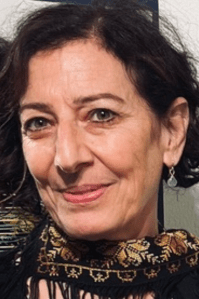
Panel: Re-Membering Palestine in Literature
CHAIR Jumana Bayeh, appearing alongside Mark Byron and Katie Shammas.
Bio: Paula Abood is a writer, educator, community cultural artist and producer. She has worked with communities for over three decades, receiving the Australia Council’s Ros Bower Award in 2013 for lifetime achievement in community cultural practice. She has written, directed, and produced plays and been published in Sydney Review of Books (2016, 2023), Australian Poetry Journal (2020), and Arab Australian Other: Stories on Race and Identity (2019). Paula is currently a co-Director of not-for-profit The Third Space and Chair of Arab Theatre Studio.
Bayeh, Jumana
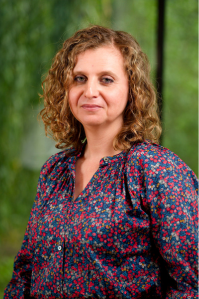
Panel: Re-Membering Palestine in Literature.
CHAIR Jumana Bayeh, appearing alongside Paula Abood, Mark Byron and Katie Shammas.
Abstract: Like all literatures, fiction, memoir and poetry by Palestinian writers narrates a national culture. It traces the national story of a people whose history on the land of Palestine is long, real and arresting. We, however, have been told that Palestinians did not really exist on the land (a land for a people for a people without a land), that they did not know how to cultivate the land (the desert was made to bloom by others) and that they are not the true inhabitants of the land. Against this chaotic rupture of the Palestinian narrative, fiction by Palestinian writers lends order to the disruptive stories that negate Palestinian existence. This panel will explore contemporary Palestinian literature, starting with Mark Byron’s paper on the critically acclaimed national poet Mahmoud Darwish. In 1964 Darwish told us to “Write Down/I am an Arab”, a command that we recognise his identity as Arab and Palestinian. It will move to address the work of two Shammas writers – Katie Shammas our panellist and her family’s literary linage with the memoir Arabesques by Anton Shammas. Finally, Paula Abood will remind us of Refaat Alareer, Professor of Literature in Gaza, poet and writer, who was targeted and tragically killed last year. The words he is most remembered for are “If I must die/You must live to tell my story”. What we aim to re-order in this panel discussion is a part of the Palestinian story to achieve exactly what Professor Alareer requested about Palestine’s national narrative – “let it bring hope/ let it be a tale”.
Bio: Jumana Bayeh is Associate Professor at Macquarie University, the President of the Australasian Association for Literature and Deputy Chair of Arab Theatre Studio. She is the author of The Literature of the Lebanese Diaspora (2015) and and several articles on Arab diaspora fiction. She co-edited Writing the Global Riot (2024; with Helen Groth and Julian Murphet) and a special issue on “Arabs in Australia” in Mashriq & Mahjar (2017; with Sahar Amer). She is currently working on an Australia Research Council project that examines the representation of the nation-state in Arab diaspora literature from writers based in Australia, North America, and the United Kingdom.
Brady, Andrea
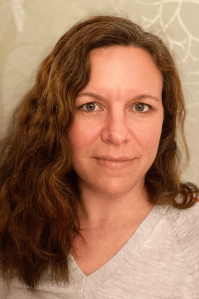
Panel: Andrea Brady (Writing and Society Research Centre)
CHAIR Astrid Lorange
Bio: Andrea Brady is a poet and critic whose most recent monographs are Radical Tenderness: Poetry in Times of Catastrophe (Cambridge, 2024) and Poetry and Bondage: A History and Theory of Lyric Constraint (Cambridge, 2021). Hereight books of poetry include The Blue Split Compartments (Wesleyan, 2021), Desiring Machines (Boiler House, 2021), The Strong Room (Crater, 2016), Mutability: Scripts for Infancy (Seagull, 2012), and Wildfire: A Verse Essay on Obscurity and Illumination (Krupskaya, 2010). She is a Professor of Poetry at Queen Mary University of London, where she founded the Centre for Poetry and the Archive of the Now.
Byron, Mark
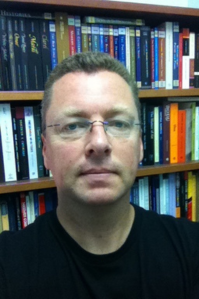
Panel: Re-Membering Palestine in Literature.
CHAIR Jumana Bayeh, appearing alongside Paula Abood, and Katie Shammas.
Bio: Mark Byron is Professor of Modern Literature at the University of Sydney. He is author of the monographs Ezra Pound’s Eriugena (London: Bloomsbury, 2014) and Samuel Beckett’s Geological Imagination (Cambridge UP, 2020), and with Sophia Barnes the critical manuscript edition Ezra Pound’s and Olga Rudge’s The Blue Spill (London: Bloomsbury, 2019). Mark co-edited a dossier with Stefano Rosignoli on Samuel Beckett and the Middle Ages in the Journal of Beckett Studies 25.1 (2016) and is editor of the essay collection The New Ezra Pound Studies (Cambridge UP, 2019). He is President of the Ezra Pound Society.
Castagna, Felicity
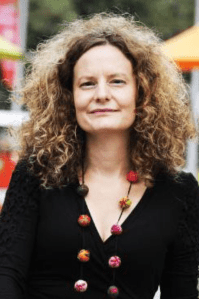
Panel: Barry Andrews Address: Felicity Castagna, Talking from the Streets
CHAIR Rogor Osborne
Abstract: This lecture begins on the street and takes the street, in all its ordinariness, as the primary site of meaning-making in our lives. The street is a starting point for thinking and writing about aesthetics, materiality, narrative, performance, our values and our politics. The street is a metaphor. It’s cliché. It’s an archive. The street gathers and disperses people, stories and practices but also ideas. Local theory involves connecting and contesting what is here on our streets, to what lies beyond, the national and the transnational narrative. In this lecture I will present an account of place, from the street level. I will explore a constellation of stories from the western suburbs of Sydney that engage the same location from different perspectives. Such a strategy, I believe, can allow us to get productively lost. In Walter Benjamin’s terms, to be lost is to be fully present, a psychic state only achievable through geography. The stories of this area argue that we need to see the street for what it is – a complex system of relationships between different actors, each with different priorities, motivations, distractions, and skills. Despite the particularity of the content of this lecture to a specific place, the street I live on, the stories of the streets in the suburbs around me, I maintain the paradox of the universal and particular. In reading the street, we can inform the way we look at our own place. We recognise the universality of the experience of the particular – the experience of place.
Bio: Felicity Castagna has published four novels for adults and young adults including her most recent book, Girls In Boys’ Cars, which won the Victorian and Queensland Premier’s Literary Awards, was adapted to stage by Priscilla Jackman for The National Theatre of Parramatta and will soon become a major film. Her previous novel, No More Boats was a finalist in the 2018 Miles Franklin Literary Awards and her novel The Incredible Here and Now received The Prime Minister’s Award as well as The IBBY. She also writes large-scale work and collaborates with artists across a number of different fields. She recently wrote the work ‘What Is The City But The People’ for The Sydney Opera House and her work ‘Encounter’, a collaboration with over sixty dancers and musicians premiered at The Sydney Festival and is still touring. She publishes essays on home, suburbia, place and Australian literature. Her creative non-fiction and critical responses to literature, suburbia and home are published both here and internationally on platforms such as The Sydney Review of Books, Electric Literature, LitHub and ABC radio and television. She is currently a lecturer in Creative Writing with The Writing and Society Research Centre, Western Sydney University.
Ford, Tom
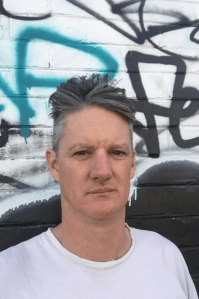
Panel: Romantic Australia
CHAIR Tom Ford, appearing alongside Alexis Harley and Claire Knowles (RSAA)
Bio: Thomas H. Ford is a Senior Lecturer in English at La Trobe University. His recent publications include Barron Field in New South Wales (Melbourne UP, 2023), which he co-wrote with Justin Clemens, and How to Read a Poem: Seven Steps (Routledge, 2021).
Harley, Alexis
Panel: Romantic Australia
CHAIR Tom Ford, appearing alongside Claire Knowles (RSAA)
Bio: Alexis Harley is the graduate research coordinator for English and Creative Arts at La Trobe University. She writes mostly about the interplay of literary and aesthetic culture and natural history in the long nineteenth century, and on nineteenth-century autobiography, and (with Claire Knowles and Tom Ford) is part of an international, multi-institutional team researching the uptake of Romantic literature and the ramifications of Romantic structures of feeling through colonial culture. She is the author of Autobiologies: Charles Darwin and the Natural History of the Self (Bucknell UP) and an editor at Life Writing.
Knowles, Claire
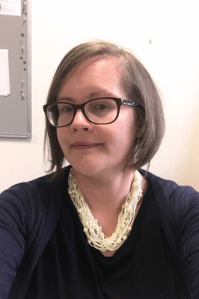
Panel: Romantic Australia
CHAIR Tom Ford, appearing alongside Alexis Harley
Bio: Claire Knowles is the Head of the Department of Languages and Cultures at La Trobe University. Her research focuses on women writers in the eighteenth and nineteenth centuries, and on the intersection between Romanticism and emergent forms of popular literary culture. Her latest book is Della Cruscan Poetry, Women, and the Fashionable Newspaper (Palgrave 2023). She is currently putting together an edition of British Women Romantic Poets for the Oxford World’s Classics imprint.
McMahon, Elizabeth
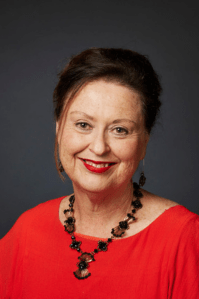
Panel: Decolonising English in Australia: Revision and Rejuvenation
CHAIR Brigitta Olubas
Abstract: This paper first acknowledges the First Nations writers and academics who undertake decolonising work in this country, specifically those who work and write across its various literary fields.This paper takes up Priyamvada Gopal’s call to reframe discussions of decolonisation in the light of anticolonial thought, which Gopal understands an ideality and a futurity, an ongoing, relentless process without an imaginable destination (Textual Practice 35.6 (2021) 873-99). Gopal’s formulation is especially generative for thinking through the implications of decolonising English in specific contexts, such as the Australian academies, which are themselves distinctive and diverse. How, then, might we develop shared decolonising objectives that can be applied across a range of institutional settings and on different country? How might these processes inform the international contexts of the discipline? This paper suggests that English literary studies has an especially significant role to play in the broader decolonisation of Australia. The imposition of the English language in British colonialism and the role played by English literary studies in consolidating empire also identifies English as a primary site of its productive decolonisation. Ironically enough, this may be achieved by its unique capacity to connect and re-figure political, historical, aesthetic, linguistic, psychical apparatus, which lies at the heart of the discipline.
Bio: Elizabeth McMahon is Professor of English at the University of New South Wales. She researches in the fields of Australian literature, Island Studies and Gender Studies. She edited key journals in the fields for 25 years. In 2024 she chaired the judging committee for the Australian Literary Society’s Gold Medal to be awarded at the Literary Convention. She recently published ‘Decolonizing Literary Pedagogies in Australia and Aotearoa New Zealand’ in Decolonizing the English Literary Curriculum (Cambridge UP, 2023), which surveys some of the colonising histories and decolonising strategies in English literary studies in these two proximate but very different contexts.
Money, Jazz
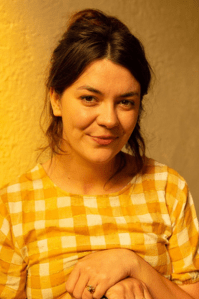
Panel: Writing and Society Research Centre Keynote: Words That Change
CHAIR Bilal Hafda
Abstract: Story is a transmission of information that can connect us across time, place and culture. Our words do not simply sit dormant on the page, our words are actions that create communities and shape our worlds. Poetry is a celebration and testimony of our lived experience, while protest is poetry moving through our bodies to move us into action.
Bio: With a practice centred in poetics, Jazz produces work across a range of mediums including visual art, film, performance, audio and print. She has been described by Vogue Australia as a “multidisciplinary force.” Jazz Money’s first poetry collection, the best-selling how to make a basket (UQP, 2021) won the 2020 David Unaipon Award from the State Library of Queensland. In 2024 they will be releasing their second collection with the University of Queensland Press mark the dawn. Jazz’s artworks have been presented in public settings and leading institutions and their writing has been widely published nationally and internationally and performed on stages around the world. Trained as a filmmaker, Jazz’s first feature film WINHANGANHA is a groundbreaking film made entirely of archival footage that re-examines Australia’s audio-visual history from a First Nations perspective. Jazz is a proud descendant of the Wiradjuri nation, and is currently based on Wangal land in Sydney, Australia.
Morrison, Fiona
Panel: “The Sea’s Tumblings”: The Oceanic Scene of ‘Colonial Return’ in Henry Handel Richardson’s The Way Home
CHAIR Emily Potter
Abstract: Commenced in London in 1910 and published there in three volumes in 1917, 1925 and 1929, The Fortunes of Richard Mahony by Henry Handel Richardson delivered a striking turn from the fictions of development that characterised her first two novels (1908/1910) to historical fiction on an epic scale. Based on the emigrant experience of her British parents, 1854-1878, the trilogy has since become a byword in the Australian literary canon for detailed realist accounts of settler-invader ‘fortunes’ based on scenes of mining, building, agriculture, urban and regional expansion and other forms of violent capital extraction and colonial dispossession that structure the first volume, Australia Felix.
As part of a larger argument about the poetics and thematics of instability and unsettlement in The Fortunes of Richard Mahony, this paper will focus instead on Richard Mahony’s association with and love of the sea rather than the land he struggles and fails to inhabit. Restless, nervous and changeable – associated with both Wanderer and Mariner – Mahony’s ceaseless ambivalent movement is figured through and framed by water, and this is evident in specific ways in the second volume of the trilogy, The Way Home. Richardson’s vision of the occasion of ‘colonial return’ opens her unruly second volume in the form of a Proem, which dramatises the final phase of Mahony’s ‘voyage in’ in 1867 as a dilatory sequence in which the inbound ship nears the coast of Britain but does not arrive. The Proem initially maps the transoceanic “great circle” sailing route ‘home’ in suitably epic terms, but as the clipper moves north in the Atlantic, clears the Bay of Biscay and enters the English Channel, intensely specific details of the local vexations of shipboard life accumulate and Mahony’s characteristic meditations on the relative merits of England and colonial Victoria take centre stage.
Given the position of the Proem as the medial point between the first volume and second, between colonial Australia and mid-Victorian England, and the position of the medial volume in the trilogy overall, Caroline Levine’s account of the “narrative middle” will inform both this reading of the geopoetics of the emigrant voyage of return in particular and Mahony’s unsettled or transitive position of being caught ‘in-between’ more broadly. This paper will explore the figure of the middle as that which connotes the colonial-provincial, the medium scale, the intermediary, the untenable, the suspended or insufficiently distinct as a means to extend and complicate readings of The Way Home and the trilogy as a whole.
Bio: Fiona Morrison is an Associate Professor in the School of the Arts and Media at UNSW Sydney, where she has taught and supervised in the areas of postcolonial and world literatures, Australian literature and women’s writing. Her most recent books include Christina Stead and the Matter of America (2019) and Time, Tide and History: Eleanor Dark’s Fiction (2024, co-edited with Brigid Rooney). She is currently working on a book-length study of Henry Handel Richardson.
Paramaditha, Intan
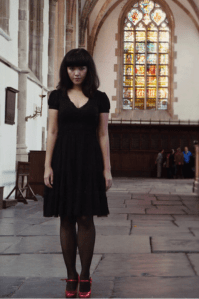
Panel: Disrupting Neoliberal Orders Through Decolonial Feminism
CHAIR Raelke Grimmer
Bio: Intan Paramaditha is a writer and an academic. Her novel The Wandering (Harvill Secker/ Penguin Random House UK), translated from the Indonesian language by Stephen J. Epstein, was nominated for the Stella Prize in Australia and awarded the Tempo Best Literary Fiction in Indonesia, English PEN Translates Award, and PEN/ Heim Translation Fund Grant from PEN America. She is the author of the short story collection Apple and Knife and the editor of Deviant Disciples: Indonesian Women Poets, part of the Translating Feminisms series of Tilted Axis Press. Her essay, “On the Complicated Questions Around Writing About Travel,” was selected for The Best American Travel Writing 2021. She holds a Ph.D. from New York University and teaches media and film studies at Macquarie University, Sydney.
Saunders, Mykaela
Panel: Ordering Climate Chaos: reading climate fiction (and nonfiction) through First Nations cultural genre theory
CHAIR Julieanne Lamond
Bio: Dr Mykaela Saunders is a Koori/Goori and Lebanese writer, researcher, editor and teacher. Mykaela is the author of the speculative fiction collection ALWAYS WILL BE (UQP 2024), which won the David Unaipon Award, and the editor of THIS ALL COME BACK NOW, the Aurealis Award-winning, world first anthology of blackfella spec fic (UQP 2022). Mykaela has won other prizes for fiction, poetry, life writing and research, including the Elizabeth Jolley Short Story Prize and the Oodgeroo Noonuccal Indigenous Poetry Prize. Her writing has been widely published across forms, genres and disciplines, and all of her major creative projects have attracted funding and fellowships. Mykaela is currently a postdoctoral research fellow and holds a Macquarie University Fellowship for Indigenous Research. Her project is called LAYING DOWN THE LORE: a survey of First Nations speculative, visionary and experimental fiction. Mykaela has worked in Aboriginal education in various capacities since 2003, and taught at the tertiary level since 2012. Her research explores her community’s past, present and future. Of Dharug descent and belonging to the Tweed Goori community, Mykaela lives and works with gratitude on the lands of the Dharug, Kulin, and Bundjalung nations – Sydney, Melbourne, and the northern rivers of NSW.
Shammas, Katie
Panel: Re-Membering Palestine in Literature
CHAIR Jumana Bayeh, appearing alongside Paula Abood and Mark Byron
Bio: Katie Shammas is from the Galilee, Palestine living on the lands of the Darug people in north-west Sydney. She studied English Literature and Environmental Science, works in the environment and sustainability sector and is the mother of two daughters. She has been published in Meanjin, POVO (Sweatshop 2024), Kindling and Sage, and Redroom Poetry.
Smith, Michelle

 Australian Literary Studies Convention